
Infromation and Misinformation
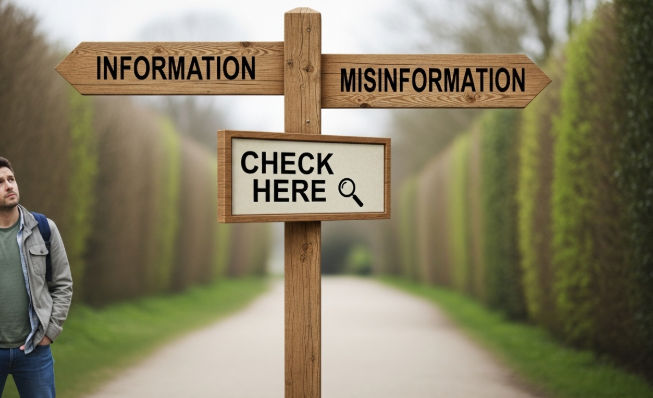
In a world where headlines move faster than the facts, it’s easy to feel like we’re standing on shifting sand. Whether it’s changing policies on the border, military strategy, or public health debates involving figures, the “information age” has often felt like the “misinformation age.”
But there is a positive way forward. Understanding the landscape of information isn’t about choosing a “team”—it’s about developing a toolkit to find the ground truth. This post provides insight into why we see such deep division and, more importantly, where you can go to get facts that aren’t filtered through a political lens.
Why the Information Landscape Feels So Polarized
The friction we see between country leaders, government departments (like Health or ICE), and public figures often stems from a conflict between narrative and data.
- Political Influence: Leaders often use information to support a specific policy goal. This doesn’t always mean they are “lying,” but they may be “cherry-picking”—highlighting one fact while ignoring three others that provide necessary context.
- The “Expert” Paradox: When public figures challenge established science (such as vaccine safety), they often use “scientific-sounding” language that can be misleading or based on unproven, out-of-context studies. This creates a “he-said, she-said” dynamic that leaves the public confused.
Your Toolkit: Where to Fact-Check Without the Politics
If you find yourself doubting a headline, the best strategy is to move away from the “noise” of social media and toward primary, non-partisan sources.
1. Global Health & Vaccines
You mentioned looking beyond the CDC. While the CDC is a primary source for U.S. data, many feel it can be susceptible to domestic political shifts. To get a global, high-level perspective, use these:
- World Health Organization (WHO): As a global body, the WHO aggregates data from nearly every country. Their fact sheets are gold standards for clinical data.
- Gavi, the Vaccine Alliance: A public-private partnership that focuses on increasing access to vaccines globally. They provide technical insights into vaccine efficacy without a U.S.-specific political agenda.
- KFF (Kaiser Family Foundation): For health policy, KFF is a non-partisan “north star,” providing data-heavy analysis on everything from healthcare costs to vaccine trial results.
2. Foreign Policy & Military Insights
When news breaks regarding ICE, the military, or international conflicts, avoid sources that use “loaded” language. Instead, look at:
- Chatham House or CSIS: Independent think tanks with researchers who analyze the mechanics of policy rather than the politics of it.
- RAND Corporation: A non-profit research organization that provides objective analysis to the U.S. government. Their reports are famously dense but strictly factual.
3. Dedicated “Neutral” Fact-Checkers
If you see a specific claim (e.g., “The Department of Health just banned X”), these organizations do the legwork for you:
- FactCheck.org: A project of the Annenberg Public Policy Center. They are strictly non-partisan and focus on the accuracy of what politicians say.
- Ad Fontes Media (The Media Bias Chart): This tool ranks thousands of news sources based on their reliability and political leaning so you can see where your news is coming from.
- International Fact-Checking Network (IFCN): This is a global unit that certifies fact-checkers. If a site has the IFCN seal, they must follow a strict code of transparency and non-partisanship.
How to Spot Misinformation Yourself: The “SIFT” Method
You don’t always need a website to tell you what’s true. You can use the SIFT method:
- Stop: If a story makes you feel intense anger or excitement, stop. It was likely designed to trigger that emotion, not to inform you.
- Investigate the Source: Click the “About Us” page. Is this a news organization or a blog with an agenda?
- Find Better Coverage: Search the topic. Are reputable, data-driven sites reporting the same thing?
- Trace claims back to the original source: If a politician quotes a “study,” try to find the actual study. Often, the study says something much more nuanced than the headline.
Conclusion: Staying Positive in the “Noise”
The goal of misinformation isn’t always to make you believe a lie—sometimes it’s just to make you so exhausted that you stop caring about the truth.
By choosing to be a “conscious consumer” of news—switching from the CDC to the WHO for a second opinion, or checking a think tank report instead of a tweet—you take your power back. Information is a tool, and when you know how to use it, the world becomes a lot clearer and much less scary.
What’s your go-to source for unbiased news? Have you ever used the SIFT method to debunk a headline? Share your experiences in the comments below—let’s help each other navigate the noise!