
A Path Forward
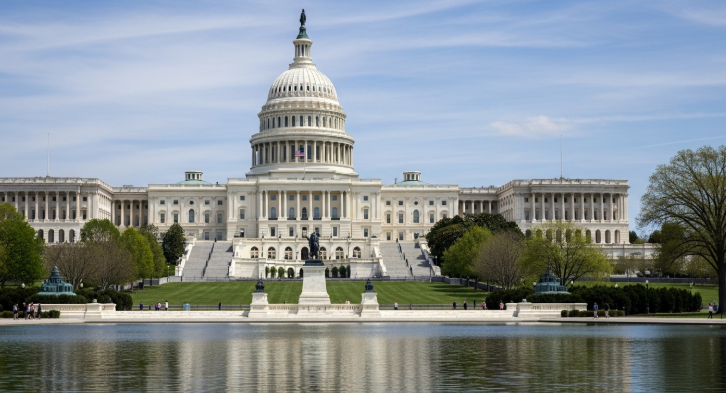
To understand the path forward for American democracy in 2026, we must look at the diverging realities: the “current state” trajectory—which leads toward institutional collapse—and the “reform” trajectory—which requires systemic shifts in governance, law, and social trust.
Part I: The “Current State” Trajectory (What Happens If We Don’t Change)
If the current trends of polarization, gun violence, and institutional mistrust remain unchecked, political scientists and economists predict a period of “Competitive Authoritarianism” or a “Broken Democracy.”
1. The Death of Institutional Neutrality
As of 2026, the United States has already been downgraded in several democracy indices, with some analysts describing it as “lying at the cusp of autocracy.”
- The Spoils System 2.0: Continued efforts to reclassify career civil servants into political appointees will lead to a “brain drain” of expertise. Critical agencies like the FDA, EPA, and the Department of Justice would no longer function as objective entities but as extensions of the executive’s personal agenda.
- Legislative Paralysis: With partisan “swings” in the House and Senate predicted to be razor-thin through the late 2020s, the “power of the purse” will remain a weapon. Budget reconciliation will become the only way to pass policy, resulting in massive, unstable shifts in law every two to four years that prevent long-term economic planning.
2. The Economic Consequences of Violence
Unchecked gun violence is not just a social crisis; it is an economic anchor.
- Business Stagnation: Data shows that surges in gun violence reduce local business growth by approximately 4%. In the current state, impacted neighborhoods will see a continued exodus of jobs and a “hollowing out” of local economies.
- The $1 Billion Medical Burden: Direct medical costs for firearm injuries already exceed $1 billion annually. If the trend of firearm suicides continues to rise (as projected for 2026), the mental health system will face a total collapse under the weight of trauma care.
3. International Isolation and “Rally Effects”
As democracy erodes domestically, leaders often turn to “hostile foreign policy” to consolidate power.
- Aggressive Posturing: Research indicates that backsliding democracies are more likely to engage in “bombastic or outlandish” international behavior to create a “rally effect” at home. This increases the risk of accidental global conflict and alienates key democratic allies.
Part II: The Clear Path Forward (The Reform Trajectory)
Reversing this slide requires more than just a change in leadership; it requires a structural overhaul of the democratic framework.
1. Rebuilding “Engaged Trust”
Trust cannot be demanded; it must be earned through transparency and accountability.
- The “Blueprint for a Better America”: Proposed reforms in 2026 include the Make It Count Act, which seeks to end mid-decade partisan redistricting (gerrymandering), and constitutional amendments to permanently set the Supreme Court at nine justices to prevent “court-packing.”
- Campaign Finance Reform: A path forward must address the “super PAC dominance.” This includes amending the Constitution to allow reasonable limits on campaign spending, effectively overturning the “money equals speech” precedent from Buckley v. Valeo.+1
2. Systemic De-escalation of Violence
The path forward moves away from “hardening” schools (which currently costs over $3 billion annually) toward community-led intervention.
- Lethal Means Safety: Implementing universal “Extreme Risk Protection Orders” (Red Flag laws) and lethal means counseling has been shown to drastically reduce suicide rates, which currently account for over 55% of all firearm deaths.
- Economic Restoration: Investing in neighborhoods plagued by violence to spark the “cycle of growth”—where job creation naturally reduces crime, which in turn attracts more investment.
3. Structural Incentives for Depolarization
We must change the “rules of the game” that reward extremism.
- Primary Reform: Moving toward non-partisan or “top-four” primaries and ranked-choice voting forces candidates to appeal to the “exhausted middle” rather than just the ideological fringes.
- Civic Education & Media Literacy: A national investment in identifying AI-generated disinformation is essential. Without a shared baseline of truth, no policy can succeed.
Summary Table: Two Futures for 2030
| Feature | The “Current State” Future | The “Path Forward” Future |
| Governance | Rule by Executive Decree | Revitalized Legislative Branch |
| Public Safety | Increasing Suicides/Political Violence | 15–20% Reduction in Gun Deaths |
| Economy | High Uncertainty; Wealth Concentration | Localized Growth; Stable Tax Policy |
| Social Fabric | Total Partisan Segregation | Restored Interpersonal Trust |